
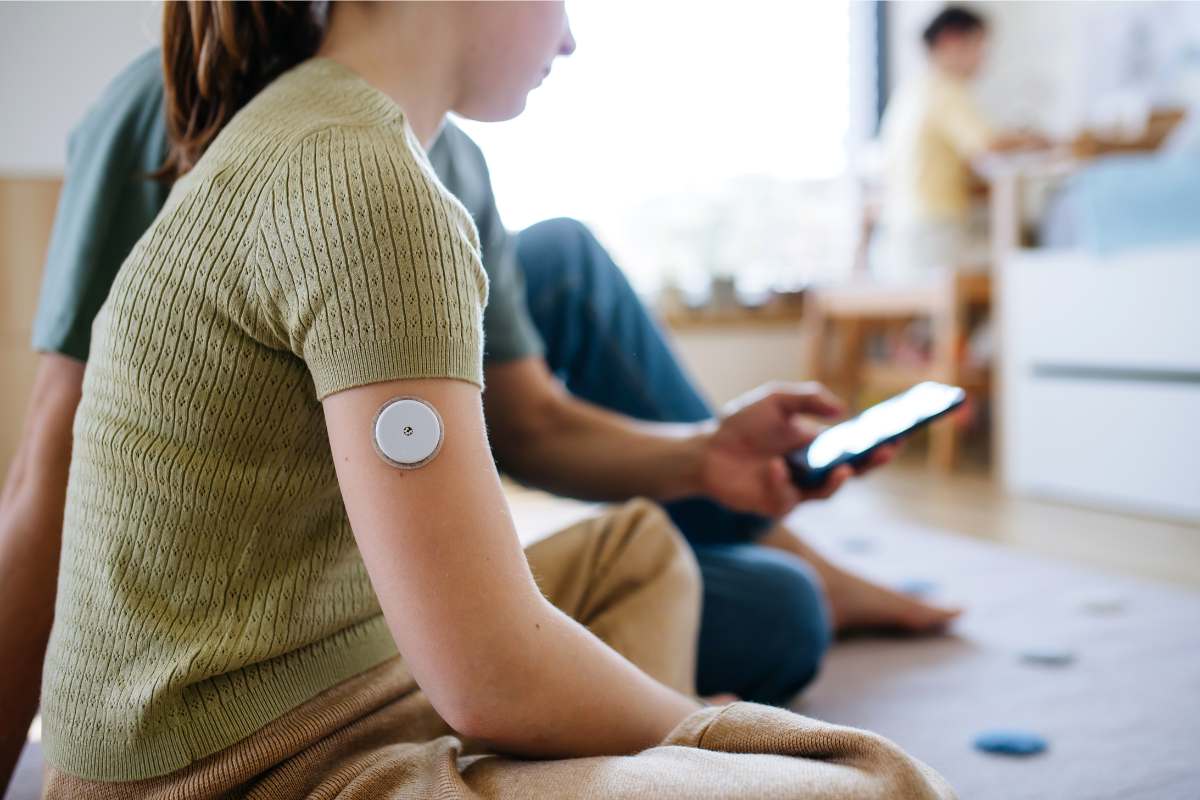
Bei Verwendung einer Insulinpumpe oder eines Geräts zur kontinuierlichen Glukosemessung (CGM) kann es vorkommen, dass bestimmte Hautpartien mit der Zeit fester, knotig werden oder weniger gut auf Insulin reagieren . Dies ist häufig auf Narbengewebe oder Lipohypertrophie zurückzuführen – ein häufiges, aber vermeidbares Problem bei Menschen, die regelmäßig Insulin spritzen.
Das Verständnis dafür, warum Narbengewebe entsteht – und wie man es behandeln kann – kann die Insulinaufnahme, die Blutzuckerkontrolle und die langfristige Hautgesundheit verbessern.
Was ist Narbengewebe oder Lipohypertrophie?
Narbengewebe an den Einstichstellen von Insulinpumpen wird oft als Lipohypertrophie bezeichnet – eine Verdickung des Fettgewebes, die durch wiederholte Insulinexposition und mechanische Traumata verursacht wird.
Es mag sich so anfühlen:
-
fest oder gummiartig
-
Geschwollen oder erhaben
-
Weniger empfindlich als die umliegende Haut
Das Injizieren oder Infundieren von Insulin in diese Bereiche kann zu unvorhersehbarer Absorption , verzögerter Insulinwirkung und unerklärlich hohen oder niedrigen Blutzuckerwerten führen.
Referenz:
Amerikanische Diabetes-Gesellschaft – Komplikationen bei Insulin-Injektionen und -Infusionen
https://diabetes.org/diabetes/medication-management/insulin-other-injectables/insulin-injections
Warum bildet sich Narbengewebe an den Pumpeneinstichstellen?
1. Wiederholte Nutzung desselben Bereichs
Die wiederholte Nutzung derselben Stelle gibt der Haut nicht genügend Zeit zur Heilung, was zu Gewebeschäden führt.
Referenz:
Verband der Diabetes-Pflege- und Schulungsspezialisten (ADCES) – Infusionsstellenmanagement
https://www.adces.org/education/danatech/insulin-pumps/infusion-sets
2. Infusionssets zu lange im Körper lassen
Die meisten Infusionssets sollten alle 2–3 Tage gewechselt werden. Längeres Tragen erhöht die Entzündungsreaktion und den Gewebeabbau.
Referenz:
Medtronic Diabetes – Richtlinien für Infusionssets
https://www.medtronicdiabetes.com/customer-support/infusion-set-support
3. Mechanisches Trauma
Kanülen, Klebstoffe und häufiges Einführen können die Haut reizen – insbesondere wenn die Einstichstellen in der Nähe von Narben, Hosenbünden oder Bereichen mit starker Bewegung liegen.
Referenz:
Zeitschrift für Diabeteswissenschaft und -technologie – Komplikationen an der Infusionsstelle
https://journals.sagepub.com/home/dst
4. Die Wirkung von Insulin auf das Fettgewebe
Insulin fördert das lokale Fettwachstum, was bei wiederholter Belastung desselben Bereichs zur Lipohypertrophie beiträgt.
Referenz:
Nationale Medizinbibliothek – Lipohypertrophie
https://pubmed.ncbi.nlm.nih.gov/28659739/
Warum Narbengewebe ein Problem für die Blutzuckerkontrolle darstellt
Die Verwendung von geschädigtem Gewebe kann Folgendes verursachen:
-
Verzögerte Insulinaufnahme
-
Unerklärte Hyperglykämie
-
Erhöhter Insulinbedarf
-
Höhere A1C-Werte
Vielen Menschen ist nicht bewusst, dass Website-Probleme die Ursache für „zufällige“ Spitzenwerte sein können.
Referenz:
Diabetes Care Journal – Auswirkungen der Lipohypertrophie auf die glykämische Kontrolle
https://diabetesjournals.org/care
Was Sie tun können, um Narbengewebe vorzubeugen
✅ Standorte ordnungsgemäß rotieren
Verwenden Sie ein strukturiertes Rotationsmuster:
-
Bauch → Seiten → Oberschenkel → oberes Gesäß
-
Halten Sie mindestens 2,5 cm Abstand zur vorherigen Stelle.
Referenz:
Cleveland Clinic – Bewährte Verfahren bei der Insulin-Injektion
https://health.clevelandclinic.org/insulin-injection-sites
✅ Untersuchen und fühlen Sie Ihre Haut regelmäßig
Prüfen Sie Folgendes:
-
Klumpen
-
Festigkeit
-
Rötung
-
Schmerzen oder Juckreiz
Meiden Sie Bereiche, die sich nicht normal anfühlen.
Referenz:
ADCES – Beurteilung der Injektionsstelle
https://www.adces.org
✅ Infusionssets planmäßig wechseln
Erinnerungen zum Ändern einstellen:
-
Infusionssets alle 2–3 Tage
-
CGM-Sensoren gemäß Empfehlung
Referenz:
FDA – Sicherheit von Insulinpumpen
https://www.fda.gov/medical-devices/diabetes-management-devices/insulin-pump-safety
✅ Korrekte Einführtechnik anwenden
-
Haut gründlich reinigen
-
Lassen Sie den Alkohol vollständig trocknen
-
Vermeiden Sie das erneute Einführen in gereizte Haut.
Referenz:
Mayo-Klinik – Tipps zur Insulin-Injektion
https://www.mayoclinic.org/diseases-conditions/diabetes/in-depth/insulin/art-20044695
Kann Narbengewebe heilen?
Ja – aber es braucht Zeit .
Tipps zur Genesung:
-
Die betroffenen Bereiche sollten mehrere Monate lang nicht benutzt werden.
-
Gleichmäßig drehen
-
Achten Sie auf eine gute Blutzuckerkontrolle.
-
Das gesunde umliegende Gewebe sanft massieren.
Schwer beschädigte Gebiete benötigen möglicherweise 6 bis 12 Monate zur Erholung.
Referenz:
Diabetes Therapy Journal – Reversibilität der Lipohypertrophie
https://link.springer.com/journal/13300
Reisen, Alltag & Gerätepflege
Reisen, lange Arbeitstage und ein voller Terminkalender können das Risiko einer Überlastung der Website erhöhen. Vorausschauende Planung hilft:
-
Führen Sie Ersatz-Infusionssets mit.
-
Insulin vor Temperaturschäden schützen
-
Einheitliche Änderungspläne einhalten
Die Verwendung eines zuverlässigen medizinischen Kühlers wie dem DISONCARE Insulinkühler gewährleistet die Wirksamkeit des Insulins und verringert die Versuchung, aufgrund von Versorgungsproblemen beeinträchtigte Injektionsstellen wiederzuverwenden.
Referenz:
CDC – Lagerung und Handhabung von Insulin
https://www.cdc.gov/diabetes/library/features/insulin-storage.html
Wann Sie mit Ihrem Gesundheitsteam sprechen sollten
Suchen Sie professionellen Rat, wenn:
-
Der Blutzuckerspiegel wird unberechenbar
-
Sie bemerken großflächige Knoten oder Schmerzen
-
Websites fallen häufig aus
-
Insulin scheint weniger wirksam zu sein.
Eine Diabetesberaterin kann bei der Beurteilung von Rotationsmustern und Einführtechnik helfen.
Referenz:
Amerikanische Diabetes-Gesellschaft – Diabetes-Betreuungsteam
https://diabetes.org/tools-support/healthcare-team
Schlussbetrachtung
✔️ Narbengewebe ist häufig – aber vermeidbar
✔️ Die korrekte Rotation der Injektionsstelle schützt die Insulinaufnahme
✔️ Gesunde Haut verbessert die Blutzuckerkontrolle
✔️ Gute Planung unterstützt den langfristigen Erfolg des Geräts.
Ihre Haut ist Teil Ihres Diabetes-Managementsystems – pflegen Sie sie gut. 