
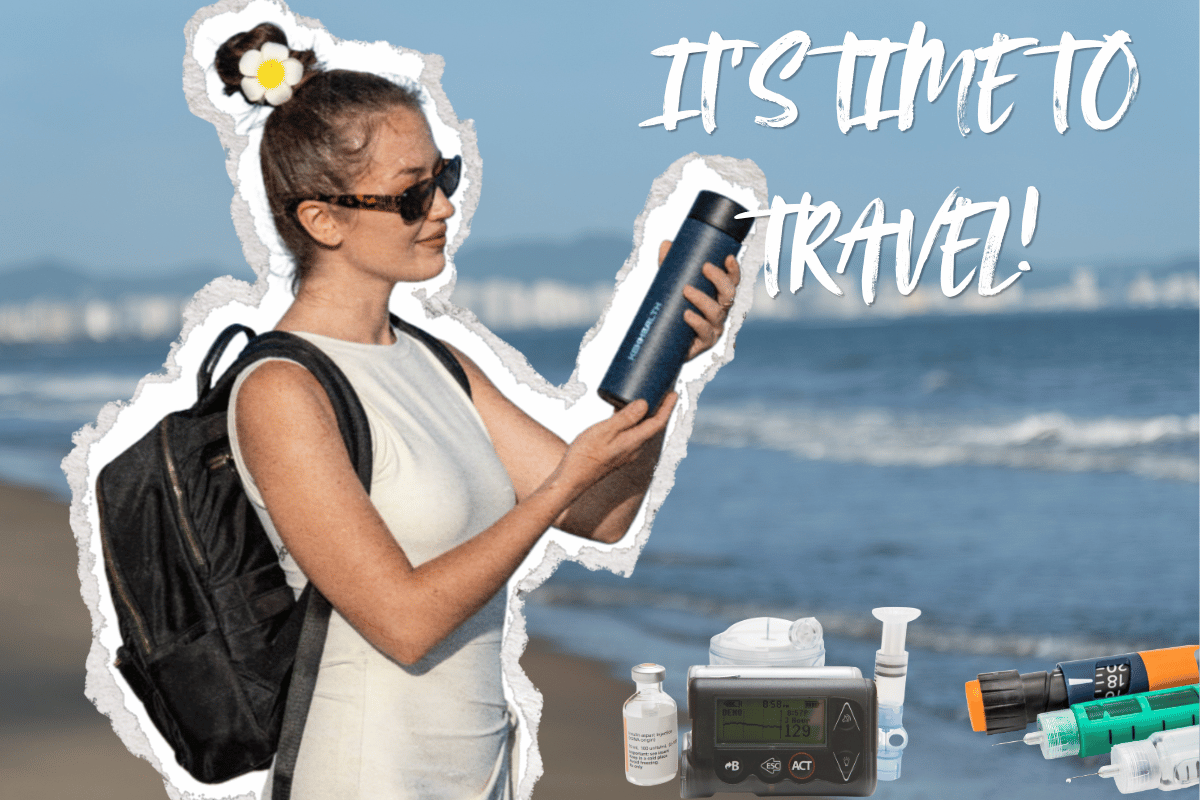
Traveling or leaving home with insulin requires more than choosing a bag that feels cold. The right preparation depends on the insulin manufacturer’s storage instructions, the length of the trip, the surrounding temperature, the number and size of the pens or vials, and how the cooling components are packed.
An insulin cooler can help protect medication from environmental heat during travel, but it cannot guarantee that every insulin product will remain within a specific temperature range or remain suitable for use.
Use this guide to understand how to choose, prepare, and monitor an insulin cooler for travel without exposing insulin directly to frozen cooling components.
What Is an Insulin Cooler?
An insulin cooler is a portable insulated container designed to carry insulin pens, vials, cartridges, or related supplies away from normal home storage.
Depending on its design, an insulin travel case may use:
- A frozen gel pack or reusable cooling bottle
- An insulated pouch or stainless-steel vacuum container
- A protective medication sleeve or internal divider
- A digital or mechanical internal air-temperature display
DISONCARE hard medication coolers use reusable BioGel cooling bottles and insulated stainless-steel containers. They are passive cooling containers and do not use electricity, USB power, or active refrigeration.
Does Insulin Always Need to Stay Between 36°F and 46°F?
Many unopened insulin products are labeled for refrigerated storage, often around 36°F–46°F (2°C–8°C). However, storage requirements after first use and permitted room-temperature periods vary by insulin product, device, and manufacturer.[1]
Do not apply one general temperature or time limit to every insulin pen or vial. Before packing:
- Read the current label or package insert for your insulin.
- Check whether the pen or vial is unopened or already in use.
- Confirm its allowed room-temperature period.
- Check the manufacturer’s instructions for heat and freezing exposure.
- Ask a pharmacist or healthcare professional if the instructions are unclear.
The FDA advises against storing insulin in places that are extremely hot or cold. The American Diabetes Association also advises against keeping insulin in a freezer, direct sunlight, or a vehicle glove compartment.[1][2]
Can an Insulin Cooler Guarantee a 2°C–8°C Temperature Range?
No portable passive cooler should be treated as a guarantee that insulin will remain between 2°C and 8°C throughout every journey.
Cooling performance can change according to:
- Ambient temperature
- BioGel freezing time
- Stabilization time after removal from the freezer
- Number and size of pens or vials
- Use of a protective barrier
- How frequently the container is opened
- Direct sunlight or exposure to a hot vehicle
- Total door-to-door travel time
Published cooling durations describe performance under specific test conditions. They are not guarantees of medication temperature, potency, or suitability for use.
How Do You Choose the Right Insulin Cooler?
1. Confirm the medication dimensions
Insulin pens, reusable pens, cartridges, and vials do not all have the same dimensions. Check whether you intend to carry medication loose, inside a protective pouch, or in its original packaging.
Do not choose a cooler based only on the number of pens shown in a product image. Capacity varies with pen shape, cap diameter, accessories, and packing arrangement.
2. Match the capacity to the trip
A compact insulin pen cooler may be appropriate for one pen and a short outing, while a larger model may be more practical for multiple pens, vials, or longer trips.
DISONCARE currently offers three general hard-cooler capacities:
- Holiday: compact format generally intended for one compatible pen
- Odyssey: medium format generally intended for two to three compatible pens
- Intercontinental: larger format for multiple compatible pens or vials
Actual capacity depends on the medication device and storage arrangement. Compare the available formats in the DISONCARE hard medication cooler collection.
3. Decide whether you need a temperature display
Some Odyssey models include a digital or mechanical temperature-display lid. The display measures the air temperature inside the cooler chamber.
It does not directly measure:
- The temperature of the insulin
- The liquid inside a pen or vial
- The temperature at every point in the container
- Whether insulin remains effective
Use the display as a monitoring aid together with the insulin manufacturer’s official storage instructions.
How Do You Prepare a DISONCARE Hard Insulin Cooler?
For a DISONCARE model that uses a BioGel cooling bottle:
- Freeze the BioGel bottle at approximately −18°C (0°F) for 6–8 hours, or until completely frozen.
- After removing it from the freezer, leave it at room temperature for approximately 15–30 minutes, or rinse the exterior under running water for 30–60 seconds.
- Wipe the BioGel bottle completely dry.
- Place the insulin inside the included pouch, its original packaging, or another suitable protective barrier.
- Prevent direct contact between the insulin and the frozen BioGel bottle.
- Allow the internal environment to stabilize before inserting medication.
- Keep the cooler away from direct sunlight, heaters, and hot vehicles.
The CDC specifically advises travelers not to place insulin directly on ice.[3]
Can You Take an Insulin Cooler on a Plane?
Insulin, medically necessary liquid medications, and related cooling supplies can generally be presented for screening at U.S. airports. Medically necessary liquids may exceed the standard 3.4 oz limit, but they remain subject to inspection.[3][4]
Before airport screening:
- Keep insulin and essential supplies in carry-on luggage.
- Tell the TSA officer about medication and cooling components.
- Remove them from the bag if requested.
- Keep labels and prescription information accessible.
- Allow additional time for possible separate inspection.
The CDC advises against placing insulin in checked baggage because it could become too cold.[3]
DISONCARE coolers are not approved or certified by the TSA. They are portable cooling containers that may be presented for screening with the medication and cooling components packed inside.
For detailed airport preparation, read Can You Bring a Medication Cooler on a Plane?
How Should You Carry Insulin on a Road Trip?
Do not leave insulin or an insulin cooler inside a parked vehicle. Interior vehicle temperatures can change quickly, and placing a cooler in direct sunlight can reduce cooling performance.
During a road trip:
- Keep the cooler inside the occupied passenger area.
- Avoid the dashboard, glove compartment, trunk, and direct sunlight.
- Do not place insulin directly against frozen BioGel.
- Minimize unnecessary opening.
- Check the internal air-temperature display if the model includes one.
- Transfer the insulin to suitable storage when you arrive.
Do You Need an Insulin Cooler for a Short Outing?
Not every insulin product requires active cooling during every short outing. Some in-use insulin products may be stored at controlled room temperature for a manufacturer-specified period.
Whether you need a cooler depends on:
- The storage instructions for the specific insulin
- Whether it is opened or unopened
- The expected ambient temperature
- How long you will be away
- Whether the medication could be left in a hot vehicle or direct sunlight
Check the insulin label rather than assuming that all insulin must remain refrigerated throughout the day.
What Should You Do If Insulin Becomes Too Warm or Too Cold?
A cooler or temperature-display lid cannot determine whether insulin remains effective.
If you believe insulin may have frozen, overheated, or remained outside its labeled storage conditions:
- Do not rely only on its appearance.
- Review the manufacturer’s storage instructions.
- Contact a pharmacist, healthcare professional, or the insulin manufacturer.
- Do not use a general blog or cooler temperature reading as a substitute for product-specific advice.
Frequently Asked Questions
What is the best insulin cooler for travel?
The best option is one that fits the specific pens or vials, the required protective barrier, and the expected journey. Capacity, ambient temperature, preparation, and access to refrigeration after arrival should all be considered.
Can insulin touch a frozen gel pack?
Direct contact should be avoided. The CDC advises travelers not to place insulin directly on ice. Use a pen pouch, original packaging, or another suitable barrier.[3]
Is a DISONCARE insulin cooler medical-grade?
DISONCARE does not describe its coolers as medical-grade devices. They are portable cooling containers made to carry temperature-sensitive medication during travel.
Is a DISONCARE insulin cooler TSA approved?
No. TSA does not approve individual insulin cooler brands. Medication, cooling components, and the container may be presented for screening, and the final checkpoint decision rests with the TSA officer.
Does the temperature lid measure the insulin?
No. It measures the air temperature inside the cooler chamber, not the insulin or the liquid inside a pen, cartridge, or vial.
How long does a DISONCARE insulin cooler stay cold?
Cooling performance depends on the model and test conditions, including ambient temperature, preparation, packing arrangement, and opening frequency. Published cooling durations are reference test results, not guarantees for a specific medication or journey.
Can I use an insulin cooler for a GLP-1 pen?
Some insulin coolers may also fit certain GLP-1 injection pens, but device dimensions and storage instructions vary. Check the pen dimensions and manufacturer’s instructions before selecting a cooler. See the DISONCARE GLP-1 Travel Cooler Guide for capacity information.
Final Takeaway
An insulin cooler can support a careful travel-storage plan, but it does not replace the insulin manufacturer’s instructions or guarantee medication temperature and effectiveness.
Choose a cooler that fits the actual medication device, prepare the cooling component correctly, prevent direct contact with frozen BioGel, keep insulin out of checked luggage and hot vehicles, and seek professional guidance when storage conditions are uncertain.
For product preparation, compatibility, and care information, visit the DISONCARE FAQ.
References
- U.S. Food and Drug Administration: Information Regarding Insulin Storage
- American Diabetes Association: Insulin Storage and Syringe Safety
- Centers for Disease Control and Prevention: Tips for Traveling With Diabetes
- Transportation Security Administration: Medications (Liquid)
- Transportation Security Administration: Gel Ice Packs
Storage instructions and travel requirements may change. Check the current medication label, manufacturer guidance, airport-security requirements, airline policies, and destination-country rules before traveling.