
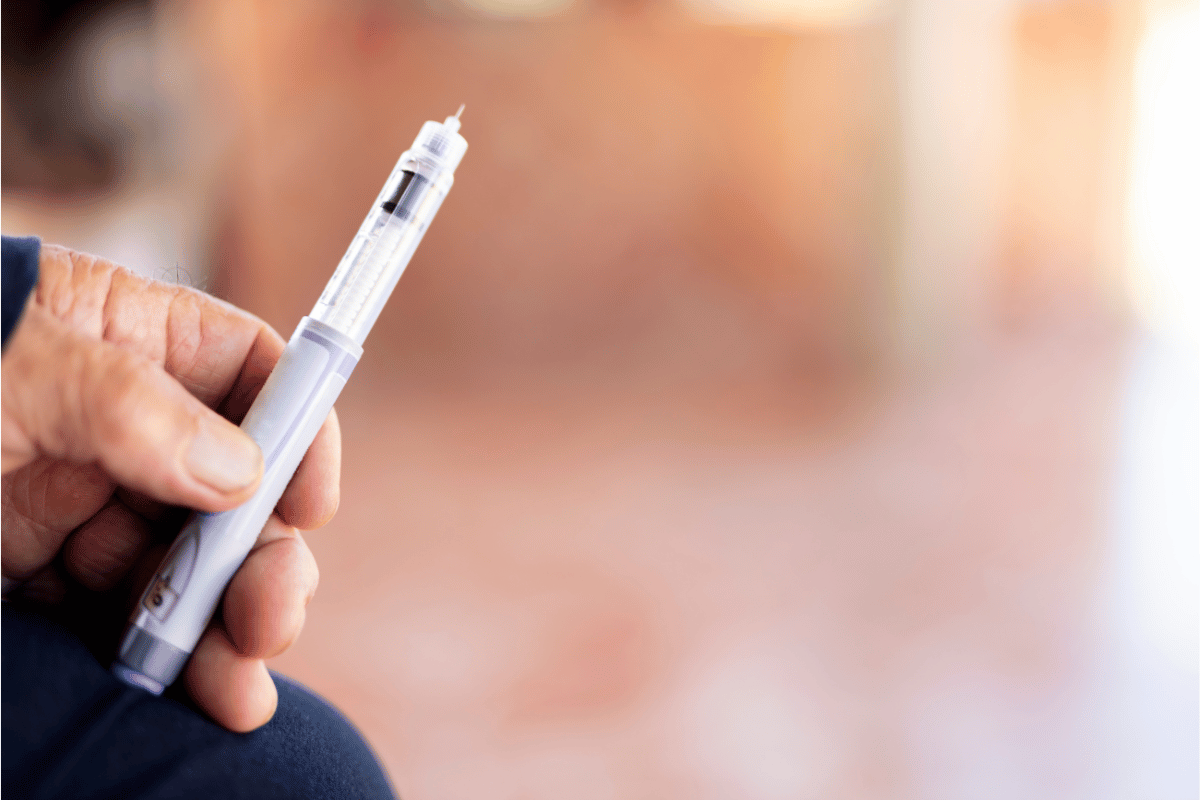
International travel with insulin or other temperature-sensitive injection devices requires more planning than simply checking the scheduled flight time.
A 10-hour flight can easily become a 16-hour or longer door-to-door journey once airport transfers, security, boarding, layovers, immigration, baggage collection, and transportation after arrival are included.
The best travel-cooling plan therefore depends on several factors:
- Your medication's current storage instructions
- The exact injection device format you carry
- The number of devices you need
- Total door-to-door travel time
- Expected ambient temperature
- Access to refrigeration after arrival
- Whether you can re-prepare a passive cooling component during the trip
This guide explains how to plan a DISONCARE passive cooling setup for international travel without assuming that one cooler or one temperature range is appropriate for every medication.
1. Start With Your Medication's Storage Instructions
Before choosing a travel cooler, check the current storage instructions supplied with your specific medication.
Storage requirements can vary by:
- Medication
- Formulation
- Injection-device format
- Market or country
- Whether the product is unopened or already in use
Do not assume that every insulin or injection medication follows the same travel-storage rules.
If you are unsure how a temperature excursion may affect your medication, contact your pharmacist, healthcare provider, or medication manufacturer for product-specific guidance.
2. Calculate the Full Door-to-Door Travel Window
One of the most common travel-planning mistakes is choosing a cooling setup based only on the scheduled flight duration.
Instead, calculate the complete travel window:
- Travel from home to the airport
- Check-in and security
- Waiting at the gate
- Flight time
- Connections and layovers
- Immigration and customs
- Ground transportation after arrival
- Time until reliable storage becomes available
For example, a scheduled 12-hour flight may result in a much longer total travel day.
This full journey time is more useful than flight time alone when comparing cooler capacity and controlled-test cooling duration.
3. Choose a Cooler by Device Fit, Not Medication Name Alone
Injection devices can vary significantly in length, width, diameter, cap design, and overall shape.
The medication name alone does not determine whether a device will fit inside a cooler.
Before travel, check:
- Full device length
- Widest external dimension
- Number of devices
- Protective pouch or packaging
- Cooling-component placement
For insulin-specific compatibility information, visit the DISONCARE Insulin Pen Cooler Fit Guide .
To compare all DISONCARE cooler families, use the DISONCARE Medication Cooler Fit Guide .
4. Understand What “Up to 60H” or “Up to 74H” Means
DISONCARE hard medication coolers use passive cooling rather than active refrigeration. They do not electrically regulate the cooler chamber to a fixed temperature.
Cooling-duration claims are based on controlled test conditions and should not be interpreted as a guarantee that the cooler remains between 2–8°C / 36–46°F for the entire stated maximum duration.
Odyssey Series
Odyssey offers a flexible 1–3 pen range, depending on the exact injection-device format and packing setup.
Under controlled testing at an ambient temperature of 30°C / 86°F:
- Approximately 36 hours in the 2–8°C / 36–46°F range
- Up to 60 hours in the broader 2–25°C / 36–77°F range
Odyssey lid options include:
- BC-B001 — Standard Lid
- BC-B004 — Digital Temperature Display
- BC-B006 — Mechanical Dial Temperature Display
Intercontinental BC-B002
BC-B002 offers a 1–5 pen range depending on the exact device format and packing arrangement.
It provides up to 60 hours of cooling support under controlled test conditions.
Intercontinental BC-B003
BC-B003 provides a larger 1–7 pen range for selected compatible devices and can support larger travel setups.
It provides up to 74 hours of cooling support under controlled test conditions.
Actual performance varies with ambient temperature, cooling-component preparation, device load, packing arrangement, and how often the cooler is opened.
5. Prepare the Blue BioGel Bottle Correctly
The Blue BioGel Bottle is the primary cooling component used with DISONCARE Odyssey and Intercontinental hard medication coolers.
Before Travel
- Freeze the Blue BioGel Bottle at approximately −18°C / 0°F for 6–8 hours, or until fully frozen.
- After removing it from the freezer, either:
- leave it at room temperature for approximately 15–30 minutes; or
- rinse the outside under normal tap water for approximately 30–60 seconds.
- Use the protective pouch, original packaging when appropriate, or another suitable barrier between the injection device and the freshly frozen cooling component.
- Avoid prolonged direct contact between the injection device and the freshly frozen BioGel surface.
This preparation helps moderate the initial surface temperature of the frozen BioGel Bottle. It does not guarantee that medication cannot freeze.
6. Plan for Long Flights and Layovers
Long-haul travel often includes several hours when reliable refrigeration is not available.
During flights and layovers:
- Keep the cooler accessible with your carry-on belongings when practical.
- Avoid opening the cooler unnecessarily.
- Do not leave the cooler near obvious heat sources.
- Consider how much travel time remains before reliable storage becomes available.
- Follow your airline's instructions for baggage placement.
Do not assume airport lounges, nursing rooms, medical stations, or airline staff will provide freezer or refrigerator access. Availability varies widely.
For airport-screening and carry-on preparation guidance, read Can You Take a DISONCARE Cooler on a Plane? Air Travel Guide .
7. Should Insulin Travel in Carry-On or Checked Baggage?
For temperature-sensitive medication, keeping the medication and travel-cooling setup accessible in your carry-on is generally more practical than relying on checked baggage.
This allows you to monitor the travel setup during delays, connections, and other changes to your itinerary.
Checked baggage may be exposed to conditions that are difficult for travelers to monitor.
However, airline, airport, customs, and medication rules vary internationally. Always check the requirements that apply to your departure airport, airline, transit locations, and destination.
8. Plan Refrigeration at Your Destination
A passive travel cooler is useful during transportation and periods away from reliable refrigeration, but it should not automatically be treated as a replacement for continuous refrigeration during a multi-day or multi-week trip.
Before leaving home, confirm what storage options will actually be available after arrival.
Possible questions to ask include:
- Will your hotel room have a refrigerator?
- Can the refrigerator temperature be checked?
- Is there a freezer available for re-preparing the Blue BioGel Bottle?
- Will you change hotels during the trip?
- Will you spend long periods away from refrigeration during sightseeing or ground travel?
Do not assume a hotel mini-fridge provides uniform temperature throughout the compartment.
Some units may have colder areas near the back wall, cooling plate, or small freezer compartment. Avoid placing medication directly against these surfaces.
9. What If a Hotel Refrigerator Seems Too Cold?
If a hotel or Airbnb refrigerator seems unusually cold, move the medication away from the rear cooling wall, cooling plate, or freezer section.
If possible, check the refrigerator conditions before relying on it for medication storage.
If you think your medication may have frozen, become too warm, or remained at an unknown temperature, do not guess whether it remains suitable for use.
Check the current product instructions and contact your pharmacist, healthcare provider, or medication manufacturer for product-specific guidance.
10. Traveling in Hot Climates
Ambient temperature has a direct effect on passive cooling duration.
DISONCARE controlled testing shows shorter cooling durations as ambient temperature increases.
For international travel to warm destinations:
- Avoid leaving the cooler inside a parked vehicle.
- Keep the cooler out of prolonged direct sunlight.
- Minimize unnecessary opening.
- Plan for additional ground transportation time.
- Confirm destination storage before arrival.
A built-in temperature display can provide additional visibility into the air temperature inside selected Odyssey models, but it does not actively cool the chamber.
11. Do You Need a Temperature Display for International Travel?
Not every traveler needs a built-in temperature display.
For users who want an interior air-temperature reference during longer journeys:
- BC-B004 uses a Digital Temperature Display.
- BC-B006 uses a battery-free Mechanical Dial Temperature Display.
These displays provide a reference to the air temperature inside the cooler near the sensor or probe.
They do not directly measure the medication, the liquid inside an injection device, the Blue BioGel Bottle, or every point within the cooler chamber.
For more detail, read Do You Need a Temperature Display for Insulin Travel? .
12. Odyssey vs. Intercontinental for International Travel
| Series / Model | Capacity Reference | Cooling Support | Best Considered For |
|---|---|---|---|
| Odyssey | Flexible 1–3 Pen Range | Up to 60H | Everyday travel, long travel days, compact multi-device setups |
| Intercontinental BC-B002 | 1–5 Pen Range | Up to 60H | Higher-capacity travel setups |
| Intercontinental BC-B003 | 1–7 Pen Range | Up to 74H | More devices, larger packing needs, longer travel setups |
These capacity descriptions are general model references. Actual fit depends on the exact injection device and complete packing setup.
A longer trip does not automatically mean you need the largest cooler. Choose based on device format, carrying quantity, total travel time, cooling requirements, and destination storage.
13. International Travel Checklist
- Check the current storage instructions for your exact medication.
- Calculate your complete door-to-door travel time.
- Confirm the exact injection-device dimensions.
- Choose cooler capacity based on real device fit, not medication name alone.
- Prepare the Blue BioGel Bottle correctly before departure.
- Avoid prolonged direct contact between the device and freshly frozen BioGel.
- Keep the cooler accessible during travel when practical.
- Check airline and destination-country rules before departure.
- Confirm refrigerator and freezer access after arrival.
- Plan for warm climates, transfers, delays, and long ground journeys.
Frequently Asked Questions
How long can a DISONCARE cooler keep insulin cold during international travel?
Cooling duration depends on the cooler model, ambient temperature, BioGel preparation, packing setup, device load, and how often the cooler is opened.
For example, Odyssey controlled testing at 30°C / 86°F showed approximately 36 hours in the 2–8°C / 36–46°F range and up to 60 hours in the broader 2–25°C / 36–77°F range.
Do not interpret a 60H or 74H maximum cooling duration as a guarantee that the cooler stays between 2–8°C for the entire period.
Which DISONCARE cooler is best for international travel?
There is no single best model for every traveler.
Odyssey provides a flexible 1–3 pen range, while Intercontinental BC-B002 and BC-B003 provide greater carrying capacity. The best choice depends on your exact device format, quantity, travel time, and destination storage plan.
Can I use a DISONCARE cooler for a two-week trip?
A passive cooler can provide cooling support during transportation and periods away from refrigeration, but it should not automatically be treated as a complete two-week refrigeration solution.
For longer trips, confirm access to reliable storage and whether you can re-prepare the cooling component after arrival.
Should I ask a hotel to freeze my BioGel Bottle?
You may ask whether freezer access is available, but do not assume a hotel will provide it. Policies and facilities vary.
If re-preparing a passive cooling component is important to your travel plan, confirm freezer access before departure.
Does the Digital Temperature Display show insulin temperature?
No. The BC-B004 Digital Temperature Display provides a reference to the air temperature inside the cooler near the sensor. It does not directly measure insulin liquid temperature.
Does the Mechanical Dial need a battery?
No. BC-B006 uses a battery-free Mechanical Dial Temperature Display. Its metal probe responds to the air temperature around the probe inside the cooler.
Can all insulin pens fit in every DISONCARE cooler?
No. Injection-device dimensions vary. Always check your exact device dimensions and the applicable Fit Guide before ordering.
Final Thoughts
Keeping insulin cool during international travel is less about choosing the largest cooler and more about building the right travel plan.
Start with your medication's storage instructions, calculate the complete door-to-door journey, confirm your exact device fit, prepare the cooling component correctly, and plan reliable storage after arrival.
A passive cooler can provide valuable portable cooling support during long flights, transfers, road trips, and time away from refrigeration, but it does not replace medication-specific storage instructions or active refrigeration when those are required.
Compare DISONCARE cooler fit and capacity in the DISONCARE Medication Cooler Fit Guide .
Important Product Information
Cooling container only. No insulin, medication, prescription drug, or injectable product is included or sold with any DISONCARE cooler referenced in this article.
Medication storage requirements vary by product, formulation, device, and market. Always follow the current instructions supplied with your specific medication.