
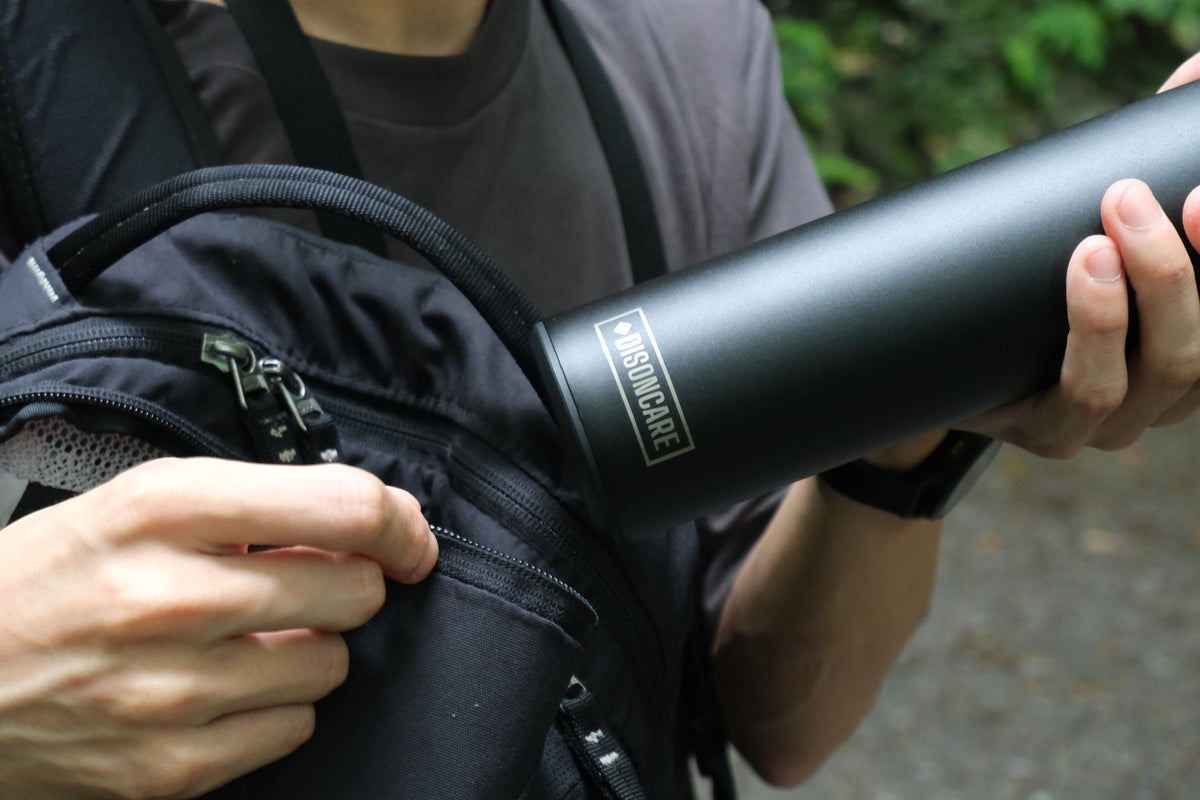
Traveling with insulin, GLP-1 injection pens, biologic medicines, or other temperature-sensitive medication requires planning beyond simply keeping the medicine cold.
Storage requirements vary by medication, device, whether the medicine has been opened, and the manufacturer’s approved instructions. A portable medication cooler can support a travel-storage plan, but it cannot guarantee a particular temperature range, prevent every temperature excursion, or determine whether medication remains suitable for use.
This guide explains how to prepare and carry refrigerated medication while avoiding direct contact with frozen cooling components.
How Do You Travel With Refrigerated Medication?
Start with the official storage instructions for the exact medication you are carrying. Do not assume that every injectable medicine follows the same refrigeration, room-temperature, or disposal rules.
Before traveling:
- Check the medication label or current package insert.
- Confirm whether the medicine is opened or unopened.
- Review its permitted temperature range and room-temperature allowance.
- Confirm whether freezing requires the medicine to be discarded.
- Calculate the complete door-to-door travel time.
- Ask a pharmacist, healthcare professional, or manufacturer if the instructions are unclear.
The CDC recommends finding out how to store medication safely while traveling and whether it requires refrigeration. It also advises packing essential medication in carry-on luggage in case checked baggage is delayed or lost.[1]
Does Every Refrigerated Medication Need to Stay Between 2°C and 8°C?
No single temperature rule applies to every medication during every stage of use.
Many unopened temperature-sensitive medicines have labeled refrigerated-storage requirements, but permitted conditions after first use can vary substantially. Some products may be kept at room temperature for a defined period, while others continue to require refrigeration.
Always follow the current manufacturer instructions for the specific:
- Brand and active ingredient
- Pen, vial, cartridge, syringe, or other device
- Opened or unopened condition
- Market in which the medication was supplied
A general travel article or cooler temperature reading should not replace medication-specific instructions.
Can a Portable Medication Cooler Guarantee 2°C–8°C?
No. A passive portable cooler should not be treated as a refrigerator or as a guarantee that medication will remain between 2°C and 8°C throughout every journey.
Cooling performance can be affected by:
- Ambient temperature
- Cooling-component preparation
- Medication quantity and packing arrangement
- Use of a protective pouch or barrier
- Opening frequency
- Direct sunlight or hot vehicles
- Travel duration
Published cooling durations describe performance under defined test conditions. They do not guarantee the temperature, potency, effectiveness, or suitability of a particular medication.
How Do You Choose a Medication Cooler for Travel?
Check the medication dimensions
Injection pens, vials, prefilled syringes, cartridges, and original medication boxes have different dimensions. Measure the item in the way you intend to carry it, including any protective sleeve or packaging.
Match the capacity to the journey
Select a cooler according to the number and dimensions of the items, total travel time, expected surroundings, and access to suitable storage after arrival.
For insulin pens and vials, compare the formats in the DISONCARE Insulin Cooler for Travel Guide.
Travelers carrying compatible GLP-1 injection devices can review the DISONCARE GLP-1 Travel Cooler Guide.
Understand the cooling system
DISONCARE hard medication coolers are passive cooling containers. They use insulated stainless-steel construction and reusable BioGel cooling bottles. They do not use electricity, USB power, compressors, or active refrigeration.
Compare available capacities in the DISONCARE hard medication cooler collection.
How Do You Prepare a DISONCARE Hard Medication Cooler?
For a DISONCARE model that uses a BioGel cooling bottle:
- Freeze the BioGel bottle at approximately −18°C (0°F) for 6–8 hours, or until completely frozen.
- After removing it from the freezer, leave it at room temperature for approximately 15–30 minutes, or rinse its exterior under running water for 30–60 seconds.
- Wipe the BioGel bottle completely dry.
- Place the medication in the included pouch, its original packaging, or another suitable protective barrier.
- Prevent direct contact between the medication and frozen BioGel.
- Keep the closed cooler away from direct sunlight, heaters, and hot vehicles.
Preparation and packing requirements may vary between DISONCARE models. Review the instructions supplied with the selected cooler before use.
What Does the Temperature-Display Lid Measure?
Some DISONCARE Odyssey models include a digital or mechanical temperature-display lid.
The display measures the air temperature inside the cooler chamber. It does not directly measure:
- The medication temperature
- The liquid inside a pen, vial, or syringe
- The temperature at every point in the container
- Medication potency or effectiveness
Use the display as a monitoring aid alongside the medication manufacturer’s storage instructions. A temporary reading after opening or repacking the container should not be interpreted as a direct medication-temperature measurement.
Can You Bring Refrigerated Medication on a Plane?
Medically necessary medication and related cooling supplies can generally be presented for screening at U.S. airports. Liquid medication in medically necessary quantities may exceed the standard 3.4 oz limit, but it remains subject to inspection.[2]
Before screening:
- Keep essential medication in carry-on luggage.
- Tell the TSA officer about medication and cooling components.
- Remove the items from your carry-on if requested.
- Keep medication labels and identifying information accessible.
- Allow additional time for possible separate screening.
Gel cooling components used with medically necessary items may also be presented for screening.[3]
DISONCARE products are not approved or certified by TSA. The medication, cooler, and cooling components remain subject to screening, and the final checkpoint decision rests with the TSA officer.
For more information, read Can You Bring a Medication Cooler on a Plane?
How Should You Pack Medication for International Travel?
Medication laws and entry requirements vary by country. A medicine permitted in one country may be restricted or unavailable in another.
Before international travel:
- Check the rules of the destination and transit countries.
- Keep medication in clearly labeled containers when practical.
- Carry a copy of the prescription or healthcare-provider letter when appropriate.
- Record the brand name, generic name, strength, dosage form, and dosing schedule.
- Carry enough medication for the journey, including reasonable allowance for delays.
The FDA advises travelers not to assume that a medication permitted in one country will automatically be permitted in another.[4]
How Do You Carry Refrigerated Medication on a Road Trip?
- Keep the cooler inside the occupied passenger area.
- Do not leave it in a parked vehicle.
- Avoid dashboards, trunks, glove compartments, and direct sunlight.
- Prevent direct contact between medication and frozen BioGel.
- Minimize unnecessary opening.
- Transfer the medicine to suitable storage after arrival.
How Do You Carry Medication on a Train or Bus?
Train and bus journeys can include long waiting periods, direct sunlight through windows, and limited access to suitable refrigeration.
- Keep the cooler with you rather than placing essential medication in checked or inaccessible luggage.
- Protect it from direct sunlight, heaters, and hot windows.
- Keep the container closed as much as possible.
- Prevent medication from directly touching frozen BioGel.
- Include station waiting time, transfers, and ground transportation in the total journey time.
- Transfer the medication to suitable storage after arrival.
Do not assume that a train or bus interior will remain within the medication’s labeled storage conditions throughout the journey.
What Should You Do After a Possible Temperature Excursion?
If medication may have frozen, overheated, or remained outside its labeled storage conditions:
- Do not rely only on its appearance.
- Do not rely only on the cooler’s air-temperature display.
- Review the medication manufacturer’s storage instructions.
- Contact a pharmacist, healthcare professional, or manufacturer before using it.
A portable cooler cannot determine whether medication remains effective after an uncertain storage event.
Frequently Asked Questions
Is it safe to store medication in a hotel mini fridge?
Do not assume that every hotel mini fridge provides suitable medication storage. Some units fluctuate in temperature or become cold enough to freeze items placed near the cooling surface.
Check whether the refrigerator can meet the medication manufacturer’s storage instructions, keep the medication away from freezer compartments or cooling vents, and ask the hotel about alternative storage if necessary.
What is the best cooler for refrigerated medication?
The appropriate cooler is one that fits the actual medication and protective barrier, matches the expected travel time and surroundings, and can be prepared according to its instructions. Medication-specific storage requirements remain the primary consideration.
Can medication touch a frozen gel pack?
Direct contact should be avoided. Use a protective pouch, original packaging, or another suitable barrier between medication and the frozen cooling component.
Is DISONCARE a medical-grade cooler?
DISONCARE does not describe its coolers as medical-grade devices. They are portable cooling containers designed to carry temperature-sensitive items during travel.
Can a medication cooler prevent medicine from freezing?
No passive cooler can guarantee prevention of freezing in every packing arrangement or environment. Prepare the cooling component correctly and prevent direct contact with medication.
Does a cold cooler mean the medication is still effective?
No. How the cooler feels and the displayed internal air temperature cannot confirm medication potency or suitability for use.
How do I keep Mounjaro cool on a cruise or multi-week trip?
For a cruise or multi-week trip, plan Mounjaro storage around the requirements for your exact device and market rather than relying on one cooler for the entire journey.
Mounjaro storage instructions can differ by device format and market. Before departure, check the current instructions supplied with your Mounjaro pen or ask your pharmacist or healthcare provider what storage conditions apply to the specific version you use.
For longer trips, think about the journey in stages: transportation to the port or airport, flights or ground transfers, time onboard the cruise, hotel stays, and the return journey. If your medication requires refrigerated storage during part of the trip, confirm in advance whether reliable refrigeration will be available at your destination or onboard.
A passive travel cooler such as a DISONCARE hard medication cooler can provide portable cooling support during transportation and periods away from reliable refrigeration, but it should not be treated as a replacement for continuous refrigeration over a multi-week trip. Passive cooling components also need to be properly prepared before reuse.
When using a frozen cooling component, avoid prolonged direct contact between the Mounjaro device and ice or frozen gel packs. Follow the storage instructions for your specific medication and protect the device from freezing. Lilly's travel guidance for Mounjaro KwikPen similarly advises keeping the medicine with you during travel and avoiding direct contact with ice or frozen gel packs.
Before a long cruise or extended trip, consider:
- how many Mounjaro devices you need to carry;
- your exact device format and market version;
- total door-to-door travel time;
- whether reliable refrigeration is available onboard or at your destination;
- whether you will have access to a freezer if a passive cooling component needs to be prepared again;
- and whether a passive or powered cooling setup better matches the trip.
To check which DISONCARE cooler physically fits the Mounjaro device you carry, use the DISONCARE GLP-1 Injection Device Cooler Fit Guide. For a broader comparison of Holiday, Odyssey, and Intercontinental, visit the DISONCARE Medication Cooler Fit Guide.
Final Takeaway
A portable medication cooler can support a prepared travel routine, but it does not replace the medication label, act as a refrigerator, or guarantee a specific temperature or medication outcome.
Confirm the requirements for the exact medication, choose a cooler that fits the actual device, prepare the cooling component correctly, prevent direct contact with frozen BioGel, and seek qualified advice whenever storage conditions are uncertain.
For preparation and product-care information, visit the DISONCARE FAQ.
References
- Centers for Disease Control and Prevention: Traveling Abroad With Medicine
- Transportation Security Administration: Medications (Liquid)
- Transportation Security Administration: Gel Ice Packs
- U.S. Food and Drug Administration: Traveling With Prescription Medications
Medication instructions and travel requirements may change. Check the current medication label, manufacturer guidance, airport-security rules, airline policies, and destination-country requirements before traveling.