
One of the most common questions about GLP-1-based medications is: “How fast will I lose weight?”
There is no single timeline that applies to everyone. Weight change can differ significantly depending on the specific medication, dose-escalation stage, treatment indication, individual response, lifestyle factors, and how long treatment continues.
Clinical trials can show average results across groups of participants, but they cannot predict exactly how quickly one individual will lose weight.
Quick Answer: How Fast Does Weight Loss Happen on GLP-1 Medications?
For many people, weight change develops over months rather than days or a few weeks.
Early treatment is often a period of medication initiation and dose adjustment. Longer-term clinical studies generally evaluate body-weight outcomes over many months.
The most useful way to think about progress is therefore not:
“How many pounds should I lose this month?”
but rather:
“How is my response changing over time on the treatment plan prescribed for me?”
1. “GLP-1” Does Not Mean One Single Medication
The term “GLP-1” is often used broadly online, but different medications are not interchangeable.
For example:
- Semaglutide is a GLP-1 receptor agonist.
- Tirzepatide acts on both GIP and GLP-1 receptors.
- Different products may have different approved uses, strengths, dosing schedules, device formats, and prescribing information.
Because of these differences, it is misleading to create one universal weight-loss timeline for every medication commonly discussed under the “GLP-1” category.
2. Why Weight-Loss Speed Varies
Several factors can affect how quickly body weight changes during treatment.
- The specific medication being used
- Starting dose and dose-escalation schedule
- Maintenance dose selected by the prescriber
- Baseline body weight
- Individual biological response
- Dietary intake and activity
- Other health conditions
- Other medications
- Treatment tolerability
- How long treatment has continued
Two people using the same medication may therefore experience very different changes over the same period.
3. What Should You Expect During the First Few Weeks?
The first few weeks should not automatically be treated as a prediction of long-term weight-loss results.
Some GLP-1-based treatments begin at a lower starting dose and increase gradually according to the product's prescribing information.
For example, current U.S. prescribing information for some commonly used treatments uses stepwise dose escalation over multiple weeks.
This means the beginning of treatment may be different from the later maintenance phase.
Do not change your dose or speed up dose escalation based only on the amount of weight you have or have not lost. Follow the treatment plan provided by your prescriber.
4. When Do Clinical Studies Measure Weight-Loss Results?
Major weight-management trials generally evaluate results over many months rather than relying only on short-term changes.
For example, clinical programs for commonly discussed weight-management medications have evaluated important body-weight outcomes around the one-year mark and beyond.
That does not mean that nothing happens before then. It means that long-term study results should not be converted into a promise about what one individual will lose after a few weeks or months.
When you see a percentage such as “average weight loss” in a study, remember that it represents a study population under specific trial conditions. It is not a guaranteed personal result.
5. Why We Do Not Use a Universal GLP-1 Weight-Loss Timeline
You may see online charts such as:
- “X pounds after one month”
- “X% after six months”
- “X% after one year”
These charts can be misleading when they combine different medications, doses, study populations, or treatment conditions.
A better approach is to look at the clinical evidence for the specific medication you use and discuss your individual response with your healthcare provider.
6. Is Faster Weight Loss Always Better?
Not necessarily. The speed of weight change alone does not tell you whether a treatment plan is appropriate for you.
Treatment decisions may also consider:
- Tolerability
- Side effects
- Nutrition
- Other medical conditions
- Other medications
- Overall treatment goals
If you are concerned that weight is changing too quickly, too slowly, or not at all, discuss it with your healthcare provider rather than adjusting treatment on your own.
7. What If You Are Not Losing Weight as Quickly as Expected?
A slower-than-expected change does not automatically mean a medication is “not working.”
Online expectations may be based on:
- A different medication
- A different dose
- A later stage of treatment
- A different study population
- Selected success stories rather than average results
Your prescriber can assess your response in the context of your complete treatment plan.
Do not increase, skip, combine, or otherwise change medication doses based on an online weight-loss timeline.
8. Look at Trends, Not a Single Day
Body weight naturally fluctuates from day to day. Hydration, food intake, digestion, sodium intake, and other factors can affect the number on a scale.
For that reason, one isolated measurement may not reflect the overall direction of change.
If your healthcare provider has asked you to monitor your weight, follow the measurement approach they recommend and look at progress in the context of your broader treatment plan.
9. GLP-1 Travel and Medication Storage Are Separate Questions
People using injectable GLP-1-based medications often have another practical question: How should I carry my injection device when I travel?
This is separate from the question of how quickly weight loss occurs.
Storage requirements depend on the exact medication, formulation, device, whether it is in use, and the instructions supplied for that product.
Do not assume that every GLP-1 injection must follow the same temperature range or travel procedure.
Before traveling:
- Check the current storage instructions for your exact medication.
- Confirm whether refrigeration is required for the stage of use you are in.
- Check the exact injection-device dimensions.
- Calculate the complete door-to-door travel time.
- Plan reliable storage at your destination when required.
10. Choosing a Travel Cooler by Device Format
If your medication's storage instructions indicate that cooling support is appropriate during travel, choose a cooler according to the physical injection-device format, not simply the medication brand name.
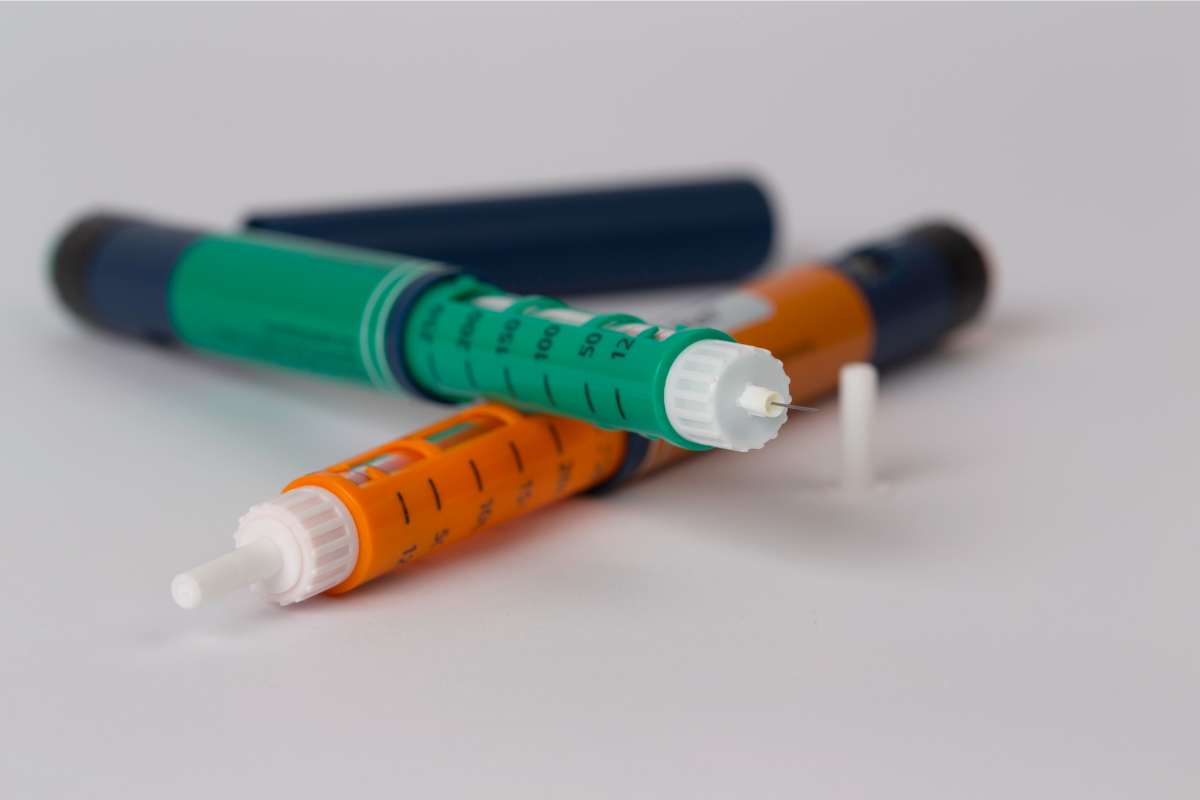
GLP-1 and related injection devices can vary substantially in width, length, shape, and dosing format.
The same medication family may also be supplied in different device formats in different markets.
Use the DISONCARE GLP-1 Injection Device Cooler Fit Guide to compare current device-fit information before selecting a cooler.

11. Passive Cooling Does Not Guarantee Medication Potency
DISONCARE hard medication coolers provide passive cooling support. They do not actively refrigerate the chamber or maintain one fixed temperature electronically.
Cooling performance can change according to:
- Ambient temperature
- Cooling-component preparation
- Device load
- Packing arrangement
- How often the cooler is opened
A DISONCARE cooler does not determine whether a medication remains safe, effective, or suitable for use after a temperature excursion.
If you believe your medication may have frozen, overheated, or remained outside its recommended storage conditions, refer to the current medication instructions and contact your pharmacist, healthcare provider, or medication manufacturer for product-specific guidance.
12. Prepare the Blue BioGel Bottle Correctly
For DISONCARE Odyssey and Intercontinental passive medication coolers, the Blue BioGel Bottle is the primary cooling component.
- Freeze the Blue BioGel Bottle at approximately −18°C / 0°F for 6–8 hours, or until fully frozen.
- After removing it from the freezer, either:
- leave it at room temperature for approximately 15–30 minutes; or
- rinse the outside under normal tap water for approximately 30–60 seconds.
- Use the included protective pouch, original medication packaging when appropriate, or another suitable barrier.
- Avoid prolonged direct contact between the injection device and the freshly frozen BioGel surface.
This preparation helps moderate the initial surface temperature of the frozen cooling component. It does not guarantee that medication cannot freeze.
13. What About Temperature Displays?
Some travelers prefer additional visibility into conditions inside a passive cooler.
Within the DISONCARE Odyssey Series:
- BC-B001 uses a Standard Lid without a built-in temperature display.
- BC-B004 uses a Digital Temperature Display.
- BC-B006 uses a battery-free Mechanical Dial Temperature Display.
The Digital and Mechanical Dial versions provide a reference to the air temperature inside the cooler near the sensor or probe.
They do not directly measure:
- The medication itself
- The liquid inside an injection device
- The Blue BioGel Bottle
- Every point within the cooler chamber
A temperature display should not be used by itself to decide whether medication remains suitable for use.
14. Traveling by Air with GLP-1 Injection Devices
If you are traveling with an injectable medication, plan airport screening separately from medication storage.
DISONCARE medication coolers are designed for travel, but DISONCARE does not claim that its coolers are officially TSA-approved, TSA-certified, or endorsed by TSA.
Medication, injection devices, cooling components, and travel containers may be subject to security screening. Requirements can also differ between countries, airports, airlines, and customs authorities.
For more information, see Can You Take a DISONCARE Cooler on a Plane? Air Travel Guide .
Frequently Asked Questions
How much weight can you lose in the first month on a GLP-1 medication?
There is no reliable single number that applies to everyone. Early results vary by medication, dose-escalation stage, individual response, and many other factors. Clinical-trial averages should not be converted into a guaranteed one-month result.
How long does it take to notice weight loss?
Some people may notice changes earlier than others, while meaningful trends may take longer to develop. The first few weeks can also be part of treatment initiation or dose escalation. Discuss your individual response with your prescriber rather than comparing it with a fixed online timeline.
Does everyone lose weight on GLP-1 medication?
No. Individual responses vary. Clinical studies report group averages and response ranges, which do not guarantee that every participant or patient will experience the same result.
Is Mounjaro a GLP-1 medication?
Mounjaro contains tirzepatide, which acts on both GIP and GLP-1 receptors. It is therefore more precisely described as a dual GIP/GLP-1 receptor agonist rather than a GLP-1-only medication.
Are Wegovy, Ozempic, Mounjaro, and Zepbound interchangeable?
No. These are different prescription products with different indications, formulations, dosing information, and in some cases different active ingredients. Follow the prescribing information and medical guidance for the specific product you use.
Does keeping a GLP-1 injection device cold make it work better?
No such conclusion should be made. Storage conditions are intended to follow the requirements established for the specific medication. A travel cooler does not increase medication effectiveness or weight-loss results.
Can a DISONCARE cooler guarantee that my medication stays effective?
No. DISONCARE coolers provide passive cooling support during travel. They do not guarantee medication potency, effectiveness, safety, or suitability for use.
How do I know which DISONCARE cooler fits my injection device?
Check the exact injection-device format and current fit information in the DISONCARE GLP-1 Injection Device Cooler Fit Guide .
Final Thoughts
There is no universal answer to “How fast do you lose weight on GLP-1?”
Different medications, doses, treatment stages, and individual responses produce different results. Clinical studies are useful for understanding what happened across groups of participants, but they are not personal weight-loss forecasts.
Follow the treatment plan provided by your healthcare professional and use the current prescribing information for your specific medication when evaluating expectations.
If you travel with an injectable medication, treat storage planning as a separate practical task: check the medication's current storage instructions, confirm your exact device format, and choose travel-cooling equipment according to the conditions and duration of your journey.
For current device-fit information, visit the DISONCARE GLP-1 Injection Device Cooler Fit Guide .
Important Product Information
Cooling container only. No insulin, GLP-1 medication, prescription drug, or injectable product is included or sold with any DISONCARE cooler referenced in this article.
This article is for general educational and travel-planning purposes and does not provide medical advice, dosing guidance, or an individual weight-loss prediction. Medication indications, dosing, storage requirements, and treatment decisions should be confirmed using the current information for the specific product and guidance from an appropriate healthcare professional.